
Enhancement of Management Foundation
INTEGRATED REPORT 2025

Interactive
Dialogue
Dialogue Between an Institutional Investor and the President
Tokyo Century is committed to reflecting the issues identified through engagement with investors in management decision-making to generate new value and shape the future through co-creation with these stakeholders.
- Kazuko Yabutani
- Japan Stock Analyst
Schroder Investment Management (Japan) Limited - Koji Fujiwara
- President & CEO,
Representative Director,
Tokyo Century Corporation
Requirements for Living Up to Stock Market Expectations as Viewed by an Investor
- Yabutani
Thinking back on the days when Tokyo Century’s stock price was booming, I remember how the stock market had substantial praise for the Company’s high levels of return on equity (ROE) and price-to-book ratio (PBR), which surpassed 10% and 1.0 times, respectively. There was also great anticipation concerning Tokyo Century’s high rate of variability and business growth potential. After the acquisition of Aviation Capital Group LLC, however, the Company’s profitability grew incredibly unstable due to factors such as the COVID-19 pandemic and Russia’s invasion of Ukraine. This situation demonstrated that Tokyo Century was susceptible to external pressures and caused a downturn in investor sentiment. As an investor, I strongly hope that you, President Koji Fujiwara, will transform Tokyo Century through initiatives based on a long-term perspective. You were appointed to the position of president after getting to know the Company as an external director. How do you view Tokyo Century today? Also, what type of company do you want to mold Tokyo Century into.
- Fujiwara
Tokyo Century’s business differs from banking, a sector where I have worked for four decades, and is relatively free from regulatory constraints. This freedom has been a major driving factor behind the evolution of Tokyo Century throughout its history. As president, I thus find myself tasked with seeking a way to give form to the substantial potential I sensed as an external director. My understanding of this potential has grown even deeper since I took up my current position. I therefore believe that drawing out and realizing Tokyo Century’s true potential will require us to change our way of thinking and adopt a pioneering mindset to create businesses and services.
As Tokyo Century’s new president, I aim to ensure that we can continue to create distinctive value and achieve rapid growth over the next decade, even amid the intense competition currently seen. To this end, I will push ahead with management reforms aimed at helping Tokyo Century become a company driving solutions to global social issues with an entrepreneurial spirit. The society of today is currently plagued with a myriad of issues, including rising geopolitical risks, troubling global economic trends, environmental issues, population declines in certain regions of the world, and the spread of AI. I thus want Tokyo Century to utilize its strengths to help tackle diverse issues in Japan and around the world. There are a number of areas in which we have the potential to grow our business to contribute to decarbonization and to circular economies. For example, we could expand IT asset disposition services for supporting the proper disposal and reuse of IT equipment. We could also support the spread of automated driving technologies for making society safer and more efficient. Or, we could develop data centers to accommodate the rising global demand sparked by the spread of AI.
If we want to grow our presence by leveraging our distinctive strengths, we must first develop a strategy pyramid to function as a unique, purpose-driven equity story that can be used to clearly communicate to stakeholders the path we will take toward growth. Based on a consistent equity story, we should then practice backcasting from our vision to formulate strategies related to our portfolio, human resource development, and management foundation reinforcement. By sharing and enacting these strategies, I hope to help stakeholders gain a better understanding of our vision and growth potential. Guided by Tokyo Century’s corporate slogan of “Solutions to your Pursuits,” we will accelerate efforts to foster a culture founded on chasing our ambitions together with our partners.
- Yabutani
I agree that it is important to emphasize the unique advantages of Tokyo Century to differentiate it from its peers. I look forward to seeing you guide this change in approach toward growth strategies.
Capital Efficiency Improvement Through Portfolio Reforms and Capital Recycling
- Yabutani
I have praise for the level of progress made in Medium-Term Management Plan 2027, especially considering this progress has put Tokyo Century within reach of accomplishing the plan’s targets ahead of schedule. At the same time, I cannot deny that the performance of certain operating segments is still not on track to accomplish targets in relation to capital efficiency indicators such as ROE and return on assets. Tokyo Century has continued to implement reforms to its business portfolio in pursuit of capital efficiency. However, I cannot say that there has been any notable progress in this regard. Rather than conventional capital gains through asset sales, the market wants to see the strategic allocation of capital. What specific measures are being implemented to grow profits and reform business portfolios in pursuit of the ideal balance between capital efficiency and growth potential?
- Fujiwara
As you allude to, if we want to achieve future growth, management will need to alter the way it looks at things to formulate a vision for Tokyo Century a decade from now. Doing so will require us to have an accurate understanding of the operating conditions we face. I must admit that our focus on capital efficiency to date might have been a bit lacking. This is why we will need to pay even more attention to ROE, return on invested capital, and cash flows going forward. For this reason, we are currently working to enhance management accounting and build frameworks for swift decision-making regarding growth investments and the downsizing or discontinuation of existing businesses with an emphasis on capital efficiency. With such frameworks, we will look to better track the allocation of management resources while ramping up investments in previously unexplored areas to achieve future growth. We also recognize that M&A activities are an important means of pursuing rapid growth. We therefore plan to conduct M&A activities while maintaining a disciplined approach utilizing thorough assessments of how such investments coincide with our strategies, the potential for sufficient returns, and the related governance considerations. If we want these strategies to be effective, we will need to address the structural lack of coordination currently being seen centered on operating segments, based on the recognition that our organization should be designed in a purpose-driven manner that is shaped by our strategies. The first step in this process will be to assess the products and services we supply, where and how they are supplied, and to whom. By seeking out the ideal organizational design for supporting the way we supply products and services, I aim to ensure that our reforms have the maximum benefits.
- Yabutani
If the development of a management accounting platform were to support datadriven management decisions, I expect it would accelerate the capital recycling process.
- Fujiwara
Strategic asset replacement through capital recycling is indeed a vital part of business management. Accordingly, we will be revising our management resource allocations and reforming other aspects of our portfolio with a focus on the profitability and future potential of our businesses. No areas will be spared from review. When building our portfolio, we will focus on ensuring that our businesses are mutually complementary to make our portfolio resilient to changes in macroeconomic conditions and unforeseen developments and to create what I refer to as a “conglomerate premium.” My mission as president is to construct such a portfolio, linking all of Tokyo Century’s businesses through a consistent equity story.
Development of Foundations for Supporting Growth Story
- Yabutani
As an investor, I focus on the degree to which I can expect Tokyo Century to grow five or even 10 years in the future, after the conclusion of Medium-Term Management Plan 2027. I believe a transition to a business model that is light on capital will be key to achieving long-term growth, and it is the Company’s people who will be driving this transition. I would therefore like to inquire into the capabilities of Tokyo Century’s people. From my perspective as an investor, I have high praise for how the Company is utilizing a wide variety of mid-career hires, ranging from those who have only recently joined the workforce to those filling general manager-level positions. However, I also cannot ignore the Company’s slow progress toward its target for 2030 of a ratio of female managers among all managers of 30% and the lack of representation of diverse backgrounds among executives. How do you perceive these issues?
- Fujiwara
Over the next decade, I am committed to increasing Tokyo Century’s presence and reliability to take the Company to unprecedented heights. As you say, transitioning to a business model that is light on capital will be key to achieving fundamental improvements to our profitability and asset efficiency. To this end, I look to grow our fee businesses and asset management businesses by enhancing our ability to provide high-value-added services. Tokyo Century has many people who are well versed in their respective industries and have significant potential to grow. However, these people need to be inspired to hold a transformation-oriented mindset to propel them to tackle new challenges. Tokyo Century is poised to develop operations in business and service areas that banks cannot or will not enter as well as in niche fields without much competition from trading companies and other rivals. This position is also a strength, but taking advantage of this strength will require us to abandon our prior passive stance of responding to customer needs with financing. Rather, we must refine our ability to seek out appealing businesses in niche fields or in fields peripheral to financing so that we can compete by developing businesses and services. At the same time, we must embrace AI and other new technologies to transform and codify the tacit knowledge held by specific individuals to ensure that this knowledge can contribute to the enhancement of organizational capabilities. By advancing into new fields that our rivals will not consider, I aim to make Tokyo Century an inspiring focal point of social innovation and a place where employees feel proud to work.
Meanwhile, we are developing a workplace environment for promoting diversity with a focus on its most fundamental element: utilizing diverse values and ideas to drive our growth as a company. As you mentioned, we are actively recruiting mid-career hires. This is because I sense great potential from the rise in diversity that will result from the increase in people with diverse backgrounds among our staff. At the same time, empowering our female employees will continue to be a priority going forward, and we therefore plan to reinforce our frameworks for supporting women. We are also advancing a project that entailed appointing junior employees to leadership positions with the goal of fostering management candidates capable of exercising autonomy and leadership.
- Yabutani
I have a lot of praise for Tokyo Century’s partnership strategy; I believe it represents a unique strength of the Company. I also think that the way you organize joint investor relations events with your partners really shows the strength of your relationships. As an investor, I hope you will continue to expand the application of the partnership strategy while also enhancing the disclosure of related information. What do you think will be necessary for Tokyo Century to disclose information on this strategy and its earnings contributions in a way that is easier for stakeholders to understand? In particular, I would appreciate it if you could give us a picture of past investments and the returns on these investments.
- Fujiwara
I thank you for your praise of our partnership strategy. Through this strategy, I see the potential for us to leverage Tokyo Century’s strengths in our various partnerships to further grow our business. Accordingly, we will be building upon our relationships with partners by ramping up coordination while optimizing internal frameworks.
I also recognize that the enhancement of information disclosure is imperative to ensuring that stakeholders can fully understand our growth story. Simply reporting on the successes of past investments will not be enough going forward. Rather, we must explain the strategic positioning of specific investments and illustrate the exact processes through which we will achieve growth in our business via partnerships. These explanations should help us earn higher levels of trust from stakeholders while making our equity story more convincing overall. In advancing our partnership strategy going forward, I, as president, look to practice extensive engagement with our partners and to disclose information on factors such as our outlook for growth in joint businesses in a more concise manner.
Persistent Issues Faced by Tokyo Century from the Perspective of Investors
- Yabutani
I think that increasing fluidity in terms of shares is a persistent issue faced by Tokyo Century. Low share fluidity is one factor that can limit share price growth and thus must be addressed from a long-term perspective. What are your thoughts regarding capital policies?
- Fujiwara
I too believe it is an issue that Tokyo Century’s shares lack fluidity, which can make it difficult for investors to invest in us. This is not an issue for which we can expect a quick resolution. It is therefore imperative that we take full advantage of our relationships with major shareholders to generate synergies.
As for capital policies, it is crucial to find the ideal balance between growth investments, risk buffers, and shareholder returns. I also intend to explain our coherent equity story to investors to foster a sense of anticipation regarding Tokyo Century’s future growth potential and thereby help them better understand our stance toward prioritizing growth investments.
- Yabutani
Shifting gears toward corporate governance, I would like to see Tokyo Century arrange opportunities to speak with its external directors. Tokyo Century has a very unique shareholder base. This means that it is incredibly important for external directors to speak on behalf of minority shareholders and to offer advice as a constructive critic of the Company.
- Fujiwara
You could not be more correct. Tokyo Century’s external directors are contributing by supervising management and offering valuable advice from their independent perspectives. We will certainly examine the possibility of arranging opportunities for discussions between investors and external directors in the future.
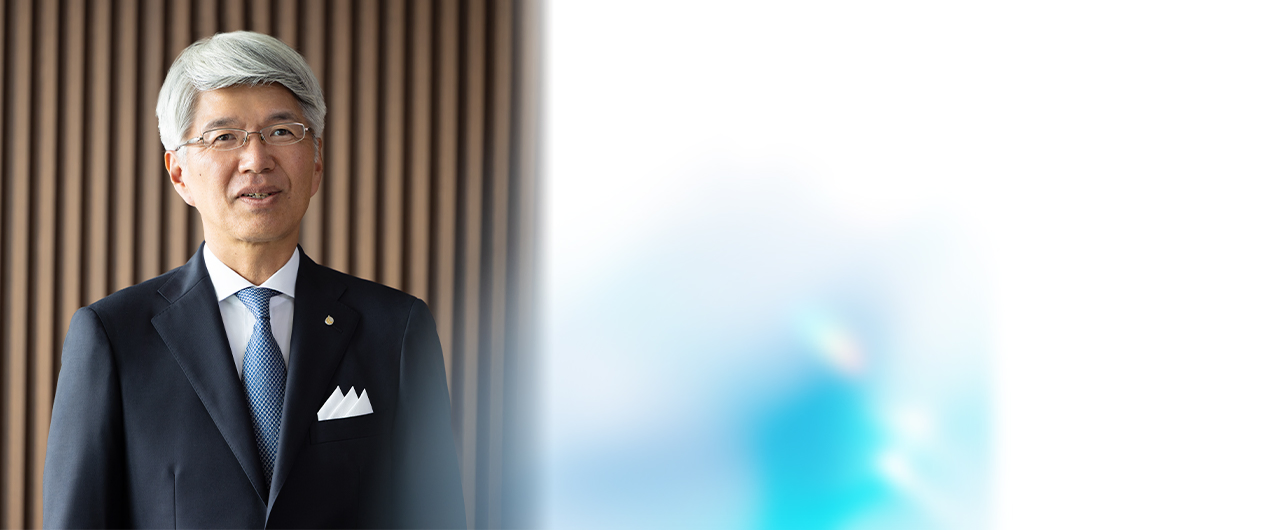
It is my mission to draw out Tokyo Century’s potential. This is how I must produce results as president, and I am thus committed to accomplishing this mission.
Koji Fujiwara
Future Corporate Value Shaped by Dialogue
- Yabutani
Those investors who take the approach of active, long-term investment want to support the companies in which we invest. Specifically, we hope to contribute to improvements in corporate value by sharing with management insight into the global market and examples of beneficial initiatives by other companies.
- Fujiwara
Speaking with you today has cemented in my mind the importance of dialogue with stakeholders. I was previously placed in charge of an investor relations division. Since then, I have felt that the role of the investor relations function is to incorporate input from stakeholders into management. As president, I want to promote ongoing and constructive engagement with stakeholders to ensure that we can achieve this objective.
Our first step in promoting such engagement should be to present a vision for Tokyo Century that resonates with stakeholders. To this end, we must exercise effective accountability toward our shareholders. Specifically, we should present an equity story with a consistent internal logic and then paint a picture of how specific business, financial, management infrastructure reform, human resource, and other strategies will fit into this story.
Tokyo Century has a number of unique strengths, such as its discerning eye for identifying the fundamental value of assets, capacity for collaboration with capable partners, and ability to integrate finance, businesses, and services. By capitalizing on these strengths, I look to foster a corporate culture in which all employees are encouraged to constantly engage with new challenges. Such a culture will be vital to supporting Tokyo Century becoming a company driving solutions to global social issues with an entrepreneurial spirit. It is my mission to draw out Tokyo Century’s potential. This is how I must produce results as president, and I am thus committed to accomplishing this mission so that we can live up to the expectations of our stakeholders.
- Yabutani
Thank you for speaking with me today. I look forward to seeing the strategies you and Tokyo Century implement and the successes they create going forward.
Investors pay a lot of attention to improvements in ROE and other capital efficiency indicators. I hope to see Tokyo Century strategically allocate capital and reform its portfolio by shifting capital from underperforming businesses to growth areas.
Kazuko Yabutani