Sustainable Finance
Overview
As addressing social issues such as climate change, inequality, and population decline becomes an urgent priority, the importance of sustainable finance—which supplies the funds contributing to their resolution—is growing.
Sustainable finance refers to the flow of funds designed to support the creation of a sustainable society by incorporating Environmental, Social, and Governance (ESG) factors into financial decision-making. While traditional finance has primarily focused on financial returns, sustainable finance aims to support and promote businesses and organizations that contribute to resolving ESG issues—such as climate change mitigation, resource circulation, and respect for human rights—through the allocation of capital. It can be broadly categorized into two types—"Use of Proceeds" and "General Purposes"—depending on whether the use of funds is restricted to specific sectors or linked to the achievement of the organization’s overall sustainability performance targets (KPIs).
- Use of Proceeds: Funds are raised and managed with their use strictly limited to specific projects that contribute to environmental improvement (Green), resolving social issues (Social), or supporting the transition process of high-GHG-emitting businesses and industries toward decarbonization.* Through investments in renewable energy and other projects, Tokyo Century generates tangible environmental and social impacts.
- General Purposes: The use of funds is not restricted. Financial terms (such as interest rates) change based on the borrower’s achievement of pre-determined sustainability targets, or the impact of business activities on society is comprehensively evaluated. By utilizing the Positive Impact Finance (PIF) and other fra, we strive to visualize and demonstrate value creation across our entire business activities.
- *The use of funds for "Green" is restricted to pre-defined green projects aligned with international principles, such as renewable energy and energy conservation projects. "Transition" aims to support GHG reduction initiatives based on a company’s long-term decarbonization strategy.
Scrollable horizontally
| Eligible Sectors | ||||
|---|---|---|---|---|
| Green | Social | Transition (toward decarbonization) | ||
| Use of Funds | Use of Proceeds | Green Loans / Green Bonds | Social Loans / Social Bonds | Transition Loans / Transition Bonds |
| Sustainability Loans / Sustainability Bonds | - | |||
| General Purposes | Sustainability-Linked Loans / Sustainability-Linked Bonds | Transition-Linked Loans /Transition-Linked Bonds | ||
| Positive Impact Finance | - | |||
Sustainable Finance Initiatives
Backcasting from our vision for 2035 and beyond, we are driving sustainability management to contribute to creating a circular economy and a sustainable society, and resolving global social issues.
Since issuing our first green bonds in 2018, we have actively utilized a diverse range of financing methods, including sustainability-linked loans and Positive Impact Finance. Over the past seven years, we have raised approximately 890 billion yen in total (as of March 31, 2026), positioning us as one of the top corporate participants in Japan's sustainable finance market.
In 2025, we established Japan’s first Self-Assessment-Based Positive Impact Finance Framework. Moving forward, we remain committed to supporting our customers' business development through advanced financing methods while continuously striving to enhance our corporate value.
Sustainability-Linked Loans
Sustainability-linked loans are a financing method where sustainability performance targets (SPTs) are set based on the borrower’s corporate strategy, with loan terms fluctuating according to the achievement of those targets. By linking the achievement of SPTs with loan terms, this approach aims to promote sustainable economic activities and growth that contribute to the environment and society.
Since entering our first sustainability-linked loan agreement in 2021, our cumulative financing has exceeded 470 billion yen (as of March 31, 2026). As a market leader in Japan, we advance sustainability management alongside our many stakeholders.
Scrollable horizontally
| Date | Financial Institution | Type | Third-Party Opinion |
|---|---|---|---|
| Mar. 2025 | MUFG Bank, Ltd. | Bilateral | |
| Mar. 2025 | MUFG Bank, Ltd. | Bilateral | |
| Feb. 2025 | SBI Shinsei Bank, Limited | Bilateral | |
| Dec. 2024 | SBI Shinsei Bank, Limited | Bilateral | |
| Dec. 2024 | Aichi Bank, Ltd. | Bilateral | |
| Sept. 2024 | The Higo Bank, Ltd. | Bilateral | |
| Sept. 2024 | SBI Shinsei Bank, Limited | Bilateral | |
| Sept. 2024 | Sumitomo Mitsui Banking Corporation | Bilateral | |
| Sept. 2024 | MUFG Bank, Ltd. | Bilateral | |
| Aug. 2024 | North Pacific Bank, Ltd. | Bilateral | |
| Aug. 2024 | SBI Shinsei Bank, Limited | Bilateral | |
| Jun. 2024 | Aichi Bank, Ltd. | Bilateral | |
| Jun. 2024 | MUFG Bank, Ltd. | Bilateral |
Scrollable horizontally
| Date | Financial Institution | Type | Third-Party Opinion |
|---|---|---|---|
| Mar. 2024 | Mizuho Bank, Ltd. | Syndicated Loan | |
| Mar. 2024 | MUFG Bank, Ltd. | Syndicated Loan | |
| Mar. 2024 | Development Bank of Japan Inc. | Bilateral | |
| Mar. 2024 | Sumitomo Mitsui Banking Corporation | Bilateral |
Scrollable horizontally
| Date | Financial Institution | Type | Third-Party Opinion |
|---|---|---|---|
| Jun. 2022 | MUFG Bank, Ltd. | Bilateral |
Scrollable horizontally
| Date | Financial Institution | Type | Third-Party Opinion |
|---|---|---|---|
| Mar. 2022 | Sumitomo Mitsui Banking Corporation | Syndicated Loan | |
| Mar. 2022 | Mizuho Bank, Ltd. | Syndicated Loan | |
| Dec. 2021 | MUFG Bank, Ltd. | Syndicated Loan | |
| Sept. 2021 | The Norinchukin Bank The Norinchukin Trust & Banking Co., Ltd. |
Syndicated Loan | |
| Sept. 2021 | Mizuho Bank, Ltd. | Syndicated Loan |
Scrollable horizontally
| Date | Financial Institution | Type | Third-Party Opinion |
|---|---|---|---|
| Mar. 2021 | Sumitomo Mitsui Trust Bank, Limited | Bilateral |
Scrollable horizontally
| KPIs | SPTs | Primary SDGs Addressed | |
|---|---|---|---|
| 1 | Number of BEVs owned | Not disclosed for competitive reasons | 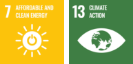 |
| 2 | Rate of electrified vehicle use (EVs, FCEVs, PHEVs, HVs) | Not disclosed for competitive reasons | |
| 3 | Ratio of aviation business assets represented by fuel-efficient aircraft*3 | FY2025:72.0%*1 | |
| 4 | Annual secondhand computer sales volume | FY2025:241,000 computers or more | 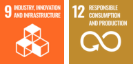 |
| 5 | Annual paid leave acquisition rate | Maintain at 70% or more*2 |  |
| 6 | Male childcare leave acquisition rate | Maintain at 100%*2 | |
- *1SPT as of December 31, 2025
- *2These SPTs apply to each fiscal year through FY2027.
Positive Impact Finance (PIF)
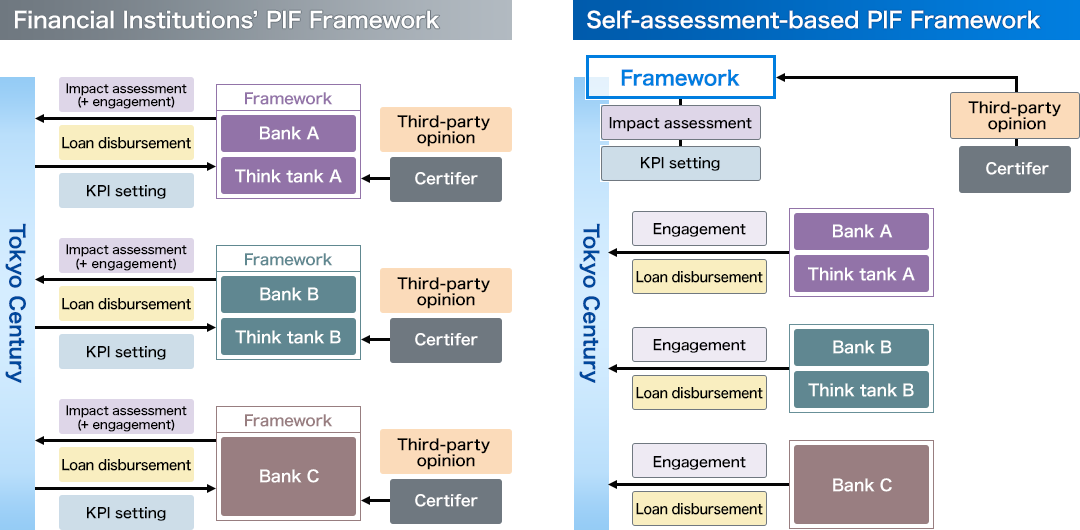
Positive Impact Finance is a financing method that comprehensively analyzes and assesses the environmental, social, and economic impacts of corporate activities based on the Principles for Positive Impact Finance developed by the United Nations Environment Programme Finance Initiative (UNEP FI). We have established Japan’s first Self-Assessment-Based Positive Impact Finance Framework. Distinct from conventional financial-institution-led PIF, this advanced approach allows us to develop our own unique evaluation framework and independently drive the entire process—from impact identification and KPI setting to ongoing monitoring.
Related Page:
Scrollable horizontally
| Date | Financial Institution | Type | Third-Party Opinion(Japanese) |
|---|---|---|---|
| Jun. 2026 | Sumitomo Mitsui Trust Bank, Limited | Bilateral | |
| Jun. 2026 | Sumitomo Mitsui Trust Bank, Limited | Bilateral | |
| Jun. 2026 | Sumitomo Mitsui Banking Corporation | Bilateral | |
| Jun. 2026 | MUFG Bank, Ltd. | Bilateral | |
| Jun. 2026 | Mizuho Bank, Ltd. | Bilateral |
Scrollable horizontally
| Date | Financial Institution | Type | Third-Party Opinion(Japanese) |
|---|---|---|---|
| Mar. 2026 | MUFG Bank, Ltd. | Bilateral | |
| Mar. 2026 | Asahi Mutual Life Insurance Company | Bilateral | |
| Mar. 2026 | Dai-ichi Life Insurance Company, Limited | Bilateral | |
| Mar. 20266 | The Shimizu Bank, Ltd. | Bilateral | |
| Mar. 2026 | The Higo Bank, Ltd. | Bilateral | |
| Mar. 2026 | The Oita Bank, Ltd. | Bilateral | |
| Mar. 2026 | The Hiroshima Bank, Ltd. | Bilateral | |
| Mar. 2026 | The Hiroshima Bank, Ltd. | Bilateral | |
| Mar. 2026 | Shinkin Central Bank | Bilateral | |
| Mar. 2026 | Shinkin Central Bank | Bilateral | |
| Mar. 2026 | Sumitomo Mitsui Trust Bank, Limited | Bilateral | |
| Mar. 2026 | The Norinchukin Bank | Bilateral | |
| Mar. 2026 | Sumitomo Mitsui Banking Corporation | Bilateral | |
| Mar. 2026 | MUFG Bank, Ltd. | Bilateral | |
| Mar. 2026 | Mizuho Bank, Ltd. | Bilateral | |
| Dec. 2025 | The Higo Bank, Ltd. | Bilateral | |
| Sept. 2025 | Sumitomo Mitsui Banking Corporation | Syndicated Loan | |
| Sept. 2025 | MUFG Bank, Ltd. | Syndicated Loan | |
| Sept. 2025 | Mizuho Bank, Ltd. | Syndicated Loan |
Scrollable horizontally
| Date | Financial Institution | Type | Third-Party Opinion(Japanese) |
|---|---|---|---|
| Dec. 2023 | SBI Shinsei Bank, Limited | Syndicated Loan |
Scrollable horizontally
| Date | Financial Institution | Type | Third-Party Opinion(Japanese) |
|---|---|---|---|
| Mar. 2023 | Sumitomo Mitsui Banking Corporation | Bilateral | |
| Mar. 2023 | Mizuho Bank, Ltd. | Syndicated Loan | |
| Sept. 2022 | MUFG Bank, Ltd. | Syndicated Loan |
Green Bonds
Green bonds are bonds issued with the exclusive use of proceeds for "green projects" that yield environmental benefits, such as renewable energy and clean transportation (e.g., EVs). In fiscal 2018, we issued green bonds to secure funding specifically for equipment in our solar power generation business.
Scrollable horizontally
| Date | Finantial Institution | Name | Third-Party Opinion | Issue Amount | Issue Date | Maturity Date | Interest Rate |
|---|---|---|---|---|---|---|---|
| Oct. 2018 | Mizuho Securities Co., Ltd. | Tokyo Century Corporation 25th Series Unsecured Bonds (Tokyo Century Green Bond) |
¥10.0 billion | Oct. 15, 2018 | Oct. 13, 2023 | 0.20% |
Related Page:
Health Management Rated Loan
The DBJ Employees' Health Management Rated Loan Program provides financing for companies that demonstrate excellence in their commitment to employee health. In this program, Development Bank of Japan Inc. (DBJ) uses its proprietary screening system to rate companies on the quality of their initiatives for employee health.
Tokyo Century recognizes that it is essential to develop an environment where our human resources―our greatest asset―can work with vitality and maintain physical and mental well-being. With this as a priority issue, we promote health and productivity management. In recognition of our efforts, we earned the highest "Rank A" for the second consecutive time and successfully raised 15 billion yen in funding under the program.
Scrollable horizontally
| Date | Financial Institution | Amount |
|---|---|---|
| Sept. 2024 | Development Bank of Japan | ¥5.0 billion |
| Mar. 2023 | Development Bank of Japan | ¥10.0 billion |