
Circular Economy Initiatives
Leveraging Resources to Forge the Future
The leasing business, the root of Tokyo Century, is the starting point of the circular economy.
We address entire asset lifecycles—from reducing the environmental impact of equipment deployment to reusing and refurbishing end-of-lease or acquired used products, and ultimately recycling them as resources. By maximizing value throughout asset lifecycles, we are co-creating a sustainable future for our customers, society, and the planet.
We will leverage IoT technology and product lifecycle data to further enhance resource circulation, while developing circular models for new products and business areas. As a company providing financial and specialized services, we will build and expand resource circulation models integrated with our businesses. By co-creating with customers and partners across industries, we will lead society’s transition to a circular economy.
Circular Economy Model Based on Leasing
Tokyo Century Group Business Activities

Reduce environmental impact of asset deployment and use
Reducing environmental impact by deploying optimal assets
- Energy-efficient equipment leasing and energy conservation subsidy services
- Eco-friendly vehicle leasing (incl. EVs)
- Wider adoption of fuel-efficient aircraft in the aviation business
- Subscription services that can be used as needed
Collect and assess used assets
Applying our discerning eye for asset value based on our expertise
- Appropriate value assessment for end-of-lease assets
- Flexible solutions and multifaceted assessment of prices and residual value
- Selection of optimal recycling routes for individual assets
Reuse, refurbish, and upcycle to restore value
Providing diverse options to maximize the service life of assets
- Refurbishment services such as ITAD
- Trading and MRO of aircraft parts, inventory financing, etc.
- Reuse and recycling of products such as EV batteries
Recycle into resources
Passing resources on to the next generation
- Appropriate disposal in collaboration with reliable partners
- Recycling rate of industrial waste such as plastic-containing products maintained at 90% or higher
- Material recycling (incl. metals)

What we can achieve

Outcome
Working with customers to carry asset value into the future
Creation of an Environmentally Sound, Sustainable Economy and Society
Pursuit of New Value through
Co-Creation with Customers
Related page
Integrated Management: From Leasing to End-of-Lease Services
We leverage extensive asset expertise cultivated through our leasing business in our secondary distribution and renewal business at the end of a lease. By synergizing leasing insights (product knowledge and market trends) with end-of-lease data (resale values and renewal technologies), we provide unique proposals that incorporate optimized resale value.
ITAD Services
IT asset disposition (ITAD) services dispose of IT assets in a safe and appropriate manner, ensuring compliance with regulations for information management, environmental protection, and more.
CSI Leasing, Inc. maximizes the value of leased assets for global enterprises by providing highly specialized consulting on IT equipment leases to enhance competitiveness and profitability. In addition to delivering services that meet the stringent standards demanded by these companies, CSI Leasing offers a full range of ITAD services, from secure data erasure to asset disposal, in collaboration with its subsidiary EPC. This approach ensures robust support throughout the lifecycle of customer assets.
In Japan, the Tokyo Century Group, including EPC Japan, collaborates to deliver ITAD services based on global standards.

Refurbishing end-of-lease assets of the Tokyo Century Group and redundant assets purchased from customers restores their value and creates opportunities for reuse.
| FY2023 | FY2024 | |
|---|---|---|
| Number of refurbished PCs sold* | 351,000 units | 425,000 units |
- *Scope: Tokyo Century, EPC Japan, and FLCS
Aircraft Engine Leasing, Parts Sales, and Other Businesses
In collaboration with GA Telesis, LLC, we engage across the lifecycle of used aircraft, from maintenance, repair, and overhaul (MRO) to disassembly, engine leasing, and parts financing.
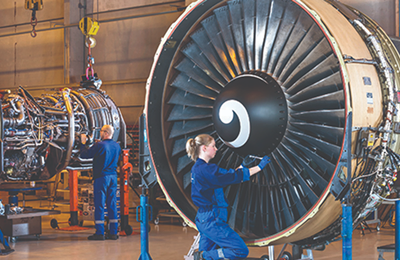
Lifecycle of Leased Aircraft Handled by the Tokyo Century Group

Our Auto Leasing Business Accurately Assesses Residual Value for End-of-Lease Assets
Setting the residual value in auto leasing is a critical process that estimates a vehicle’s future value to determine lease rates. Our specialized team calculates these values using proprietary standards based on vehicle type, lease term, and expected mileage. Our methodology comprehensively incorporates accumulated big data as well as external fluctuations, such as used car market trends and foreign exchange rates. Furthermore, we analyze and adjust for anomalies, including temporary market spikes, and specific vehicle segments such as trucks and luxury cars that require bespoke evaluation to mitigate future risks. In this way, we set optimal residual value by integrating data, deep market insights, and expert judgment.

Creating a Battery Circulation Platform to Support Future Energy Systems
As part of a business alliance with the Kansai Electric Power Company, signed in January 2023 to promote the use of second-life EV batteries, Tokyo Century began demonstration testing of a battery storage system utilizing used EV batteries in May 2024. Under this initiative, Tokyo Century is responsible for procuring the second-life EV batteries, while Kansai Electric is developing a system with an output of 100 kW and a capacity of approximately 300 kWh at its Amagasaki Experimental Center in Hyogo Prefecture. Through this demonstration project, we will accumulate operational and maintenance expertise for stationary battery energy storage systems, while identifying challenges and exploring solutions for future expansion and commercialization.
Flow of Battery Reuse

Responding to the Plastic Resource Circulation Act
In Japan, the Act on Promotion of Resource Circulation for Plastics came into effect in April 2022. The act requires businesses, as well as the national and local governments, to publicly disclose information on efforts to reduce, and promote the recycling of, industrial waste from plastic products. In response, Tokyo Century set targets for the volume and recycling rate of industrial plastic waste, and discloses its results in accordance with guidelines established by the Japan Leasing Association.
Following a trial period that began in 2022, we have been transitioning from petroleum-based plastic folders to recyclable paper-based alternatives to support a circular economy. In addition, we have established an internal recycling system for plastic folders received through our business activities, achieving a 100% recycling rate.
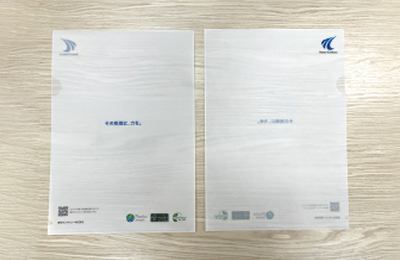
Target for the recycling rate of plastic waste
| FY2023 | FY2024 | |
|---|---|---|
| Maintain an average recycling rate of at least 90.0% for five years* | 95.8% | 96.6% |
- *Starting in FY2022
Targets for reducing plastic folders
Scrollable horizontally
| Target | By the end of FY2025 | Reduce purchases of plastic folders by 50% (compared to FY2022) |
|---|---|---|
| By the end of FY2024 | Achieve a 100% recycling rate of plastic foldersAlready achieved |