Our Renewable Energy and Battery Storage Businesses—Advancing the Solar Ecosystem Through Diverse Networks and Expertise
Apr 15, 2026
The core strength of Tokyo Century lies in our discerning eye—that is, the ability to gain deep insight into asset value and market potential in our businesses. In this feature, we explore how that power is demonstrated across our key business areas for the benefit of society.
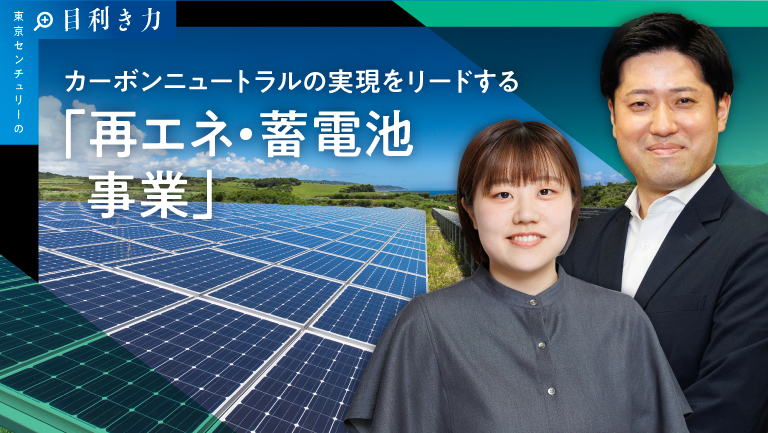
This sixth article in the series focuses on the renewable energy and battery storage businesses that support essential infrastructure for curbing global warming. To explore Tokyo Century’s initiatives in these areas and how it leverages its expertise, we spoke with Takayuki Satoyoshi and Miu Kumagai from the Environmental Infrastructure Business Division IV. They discussed the company’s efforts, including corporate PPAs and co-locating battery storage with solar power plants, and how Tokyo Century applies its discerning eye to these fields.
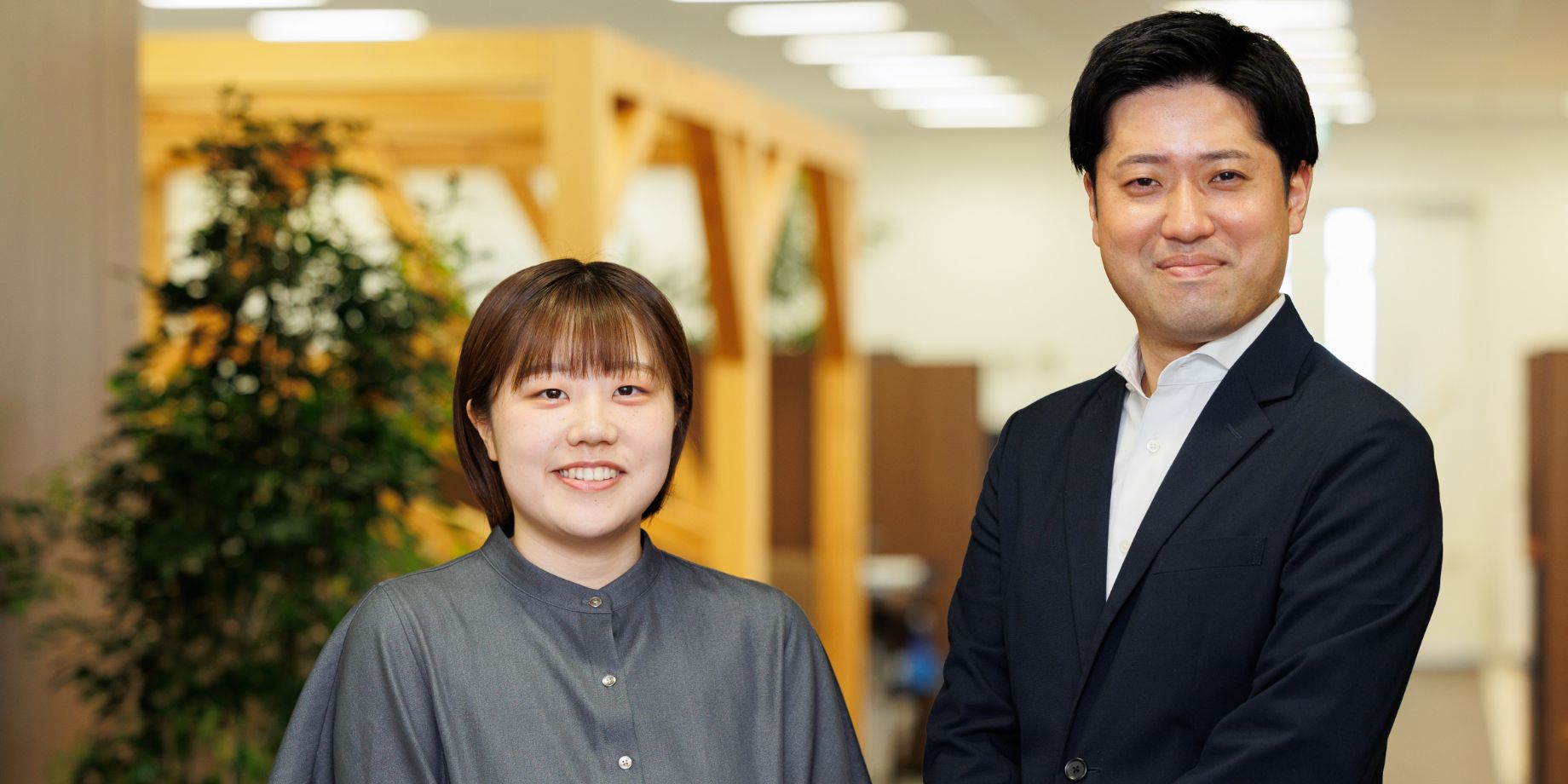
(From left) Miu Kumagai and Takayuki Satoyoshi, the Environmental Infrastructure Business Division IV
Solar Power Generation Capacity Exceeds 1 GW
—Tell us about Tokyo Century’s renewable energy and battery storage businesses.
Satoyoshi: Our company is involved in quite a few renewable energy businesses. The Environmental Infrastructure Business Division IV, where I work, mainly drives development initiatives leveraging solar power generation.
After the FIT system*1 was introduced in 2012, Tokyo Century quickly recognized the growth potential of the solar power business and has forged strong partnerships with local communities, developers, and electricity retailers. We flexibly meet customers’ diversifying renewable energy needs through corporate PPAs*2—a new global and domestic contract model—and other initiatives. As a result, we’ve built a solid track record, with solar power generation capacity exceeding 1 GW as of March 2025.
*1 Feed-in Tariff system: A scheme under which electric power companies are obligated to purchase electricity generated from renewable energy sources at a fixed price for a specified period
*2 Power Purchase Agreement: A long-term contract under which companies and local governments purchase electricity generated from renewable energy from electricity retailers or power producers
Satoyoshi: It is our responsibility to design the best possible ways to meet diversifying renewable energy needs.
Kumagai: In addition, we manage and operate solar power plants and are developing a co-located battery storage business to enhance the value of these facilities.
Output curtailments, where renewable energy power plants are required to temporarily reduce output to maintain grid stability, have recently increased. Tokyo Century has responded quickly by launching the co-located battery storage business, which reduces power generation losses and enhances profitability by storing surplus electricity in batteries and supplying it as needed. We contribute to maximizing the use of renewable energy by closely monitoring market trends and deciding whether to sell or store electricity accordingly. Tokyo Century leads the entire process, from identifying suitable power plants for battery storage co-location and evaluating manufacturers and specifications to developing installation plans.
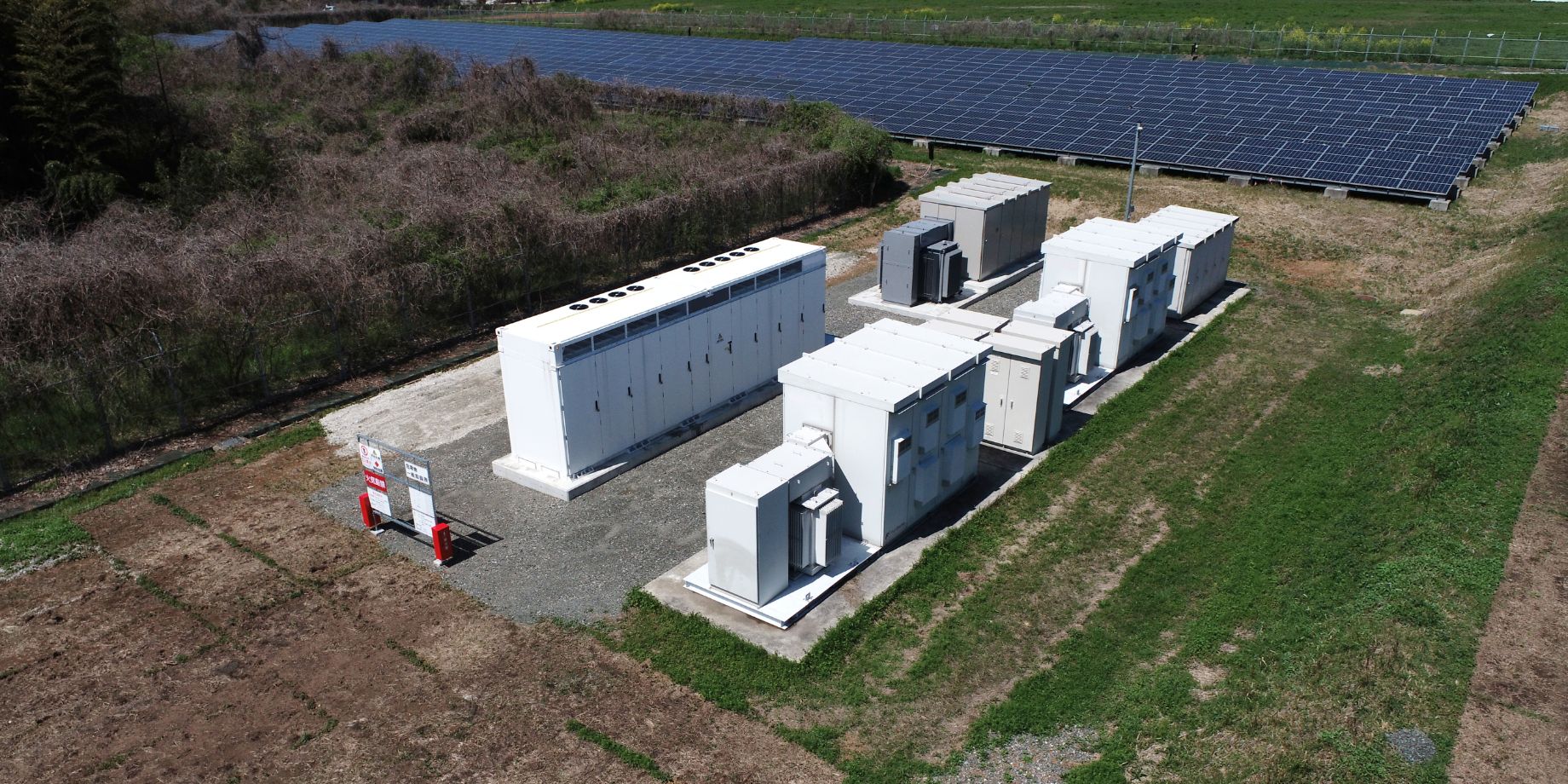
Battery storage installed at the Kumamoto Arao Megasolar Power Plant
—How do these businesses help to address social issues?
Satoyoshi: I believe that we’re significantly contributing by supporting renewable energy as an indispensable infrastructure for a decarbonized society. More than 120 countries and regions, including Japan, are now striving to achieve carbon neutrality by 2050. And power consumption is expected to rise even more due to advances in IT, such as the proliferation of AI. The widespread adoption and expansion of renewable energy are therefore essential to promote decarbonization while ensuring a sufficient supply of electricity.
Kumagai: In our co-located battery storage business, we can add energy storage capabilities to power plants and ensure a stable supply of renewable energy. I believe this will encourage the use of renewable energy and help reduce environmental impact.
Our Core Strength: Customer-Tailored Solutions
—How is Tokyo Century’s discerning eye demonstrated in the co-located battery storage business?
Satoyoshi
This discerning eye is clearly demonstrated in our ability to propose solutions tailored to each customer’s specific electricity needs. Electricity usage varies by company and organization. In some cases, it is limited to daytime hours, while others require power around the clock. Our responsibility is to design the optimal power supply system for each customer’s circumstances.
In addition, solar power has a technical limitation: it generates electricity only during daylight hours. At other times, supplying stored electricity from batteries or utilizing renewable sources such as wind, hydro, or biomass, can be effective alternatives. To help our customers achieve their decarbonization and CO2 reduction goals, we incorporate renewable energy sources beyond solar power. This is where our discerning eye comes into play, as we select and combine the most suitable options from a wide range of solutions to meet each customer’s needs.
I believe our discerning eye is also evident in our ability to assess market trends and the supply-demand balance, which is essential for distributing renewable energy to the market under the FIP system*3.
Under the previous FIT system, electricity was purchased at a fixed price. However, under the current FIP system, the selling price of renewable energy fluctuates with market prices. So, we must strive to maximize revenue by predicting and releasing electricity during periods of high demand. I’m also responsible for bidding to supply electricity to the market, and this allows me to continuously develop my ability to analyze the constantly changing market conditions and make sound decisions.
Kumagai
*3 Feed-in Premium system: A scheme in which a fixed premium is added to the selling price of electricity supplied by renewable power producers.
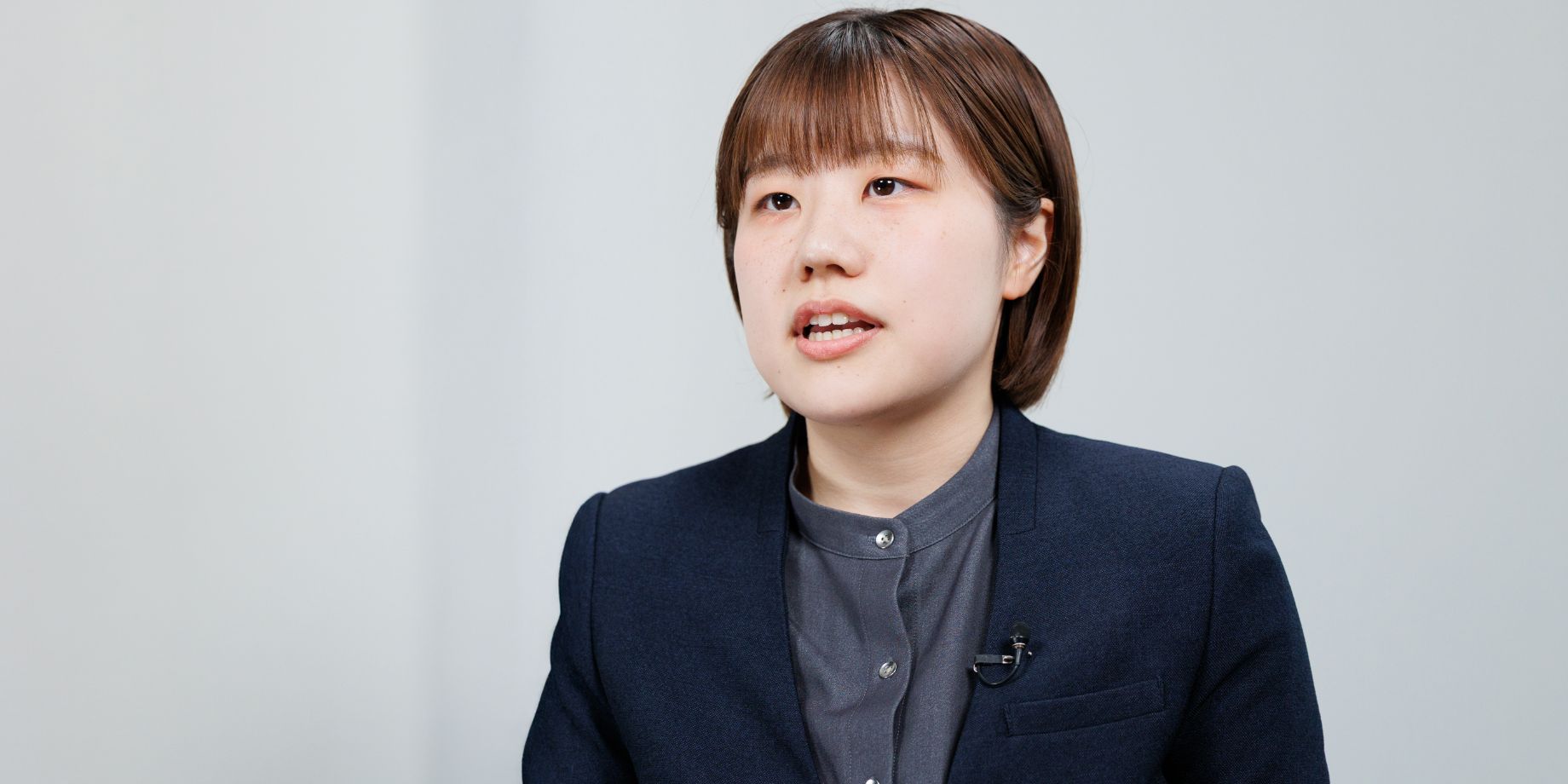
Kumagai: Bidding renewable energy into the market allows me to continuously develop my ability to analyze market conditions and make sound decisions.
—Can you tell us about Tokyo Century’s characteristics and strengths in the renewable energy and battery storage businesses?
Satoyoshi
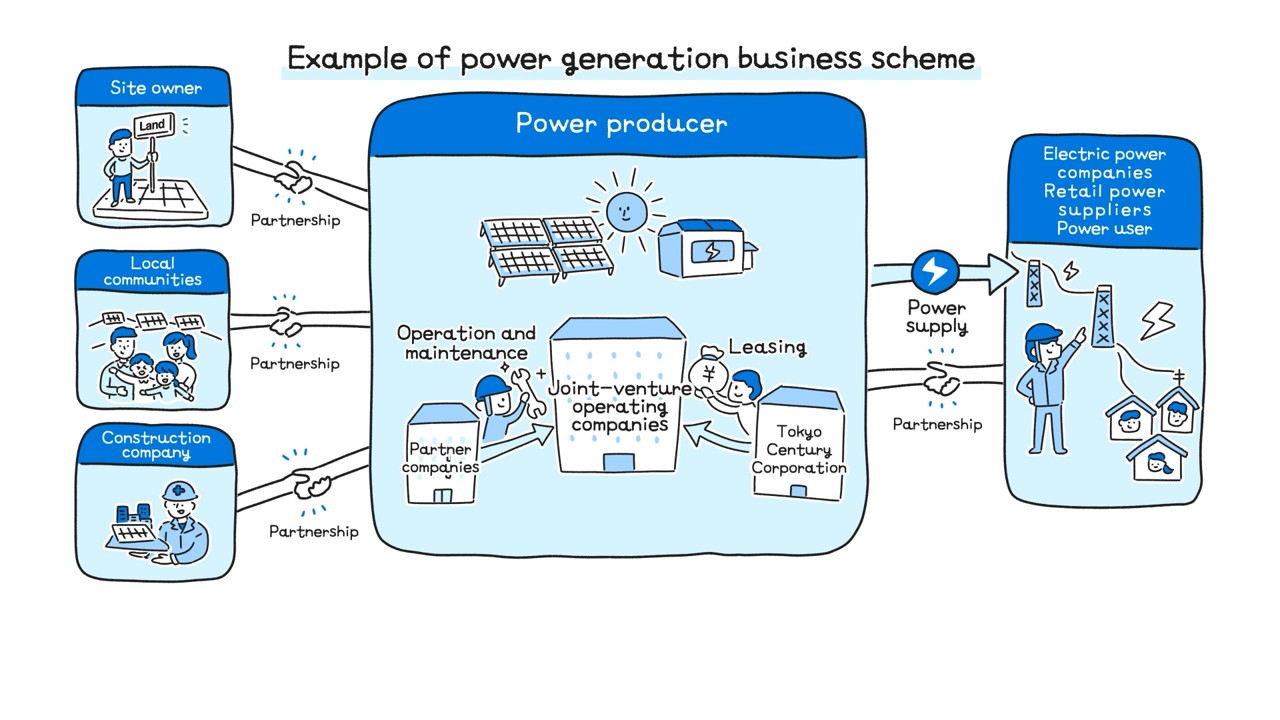
One of our key strengths is the extensive business network we’ve cultivated through our diverse operations, encompassing tens of thousands of companies. While many companies and organizations across Japan require renewable energy, retail electricity providers cannot reach all of them. We act as a hub, leveraging our network to effectively connect customers and providers. We also partner with power developers, bridging the perspectives of developers, retailers, and end-users. In doing so, we’re contributing to the sound evolution of the entire renewable energy ecosystem.
Another major aspect of Tokyo Century is that it’s a pioneer in the co-located battery storage business and has one of the strongest track records in Japan. We are receiving an increasing number of inquiries from companies and see ourselves as a leader in the industry.
Kumagai
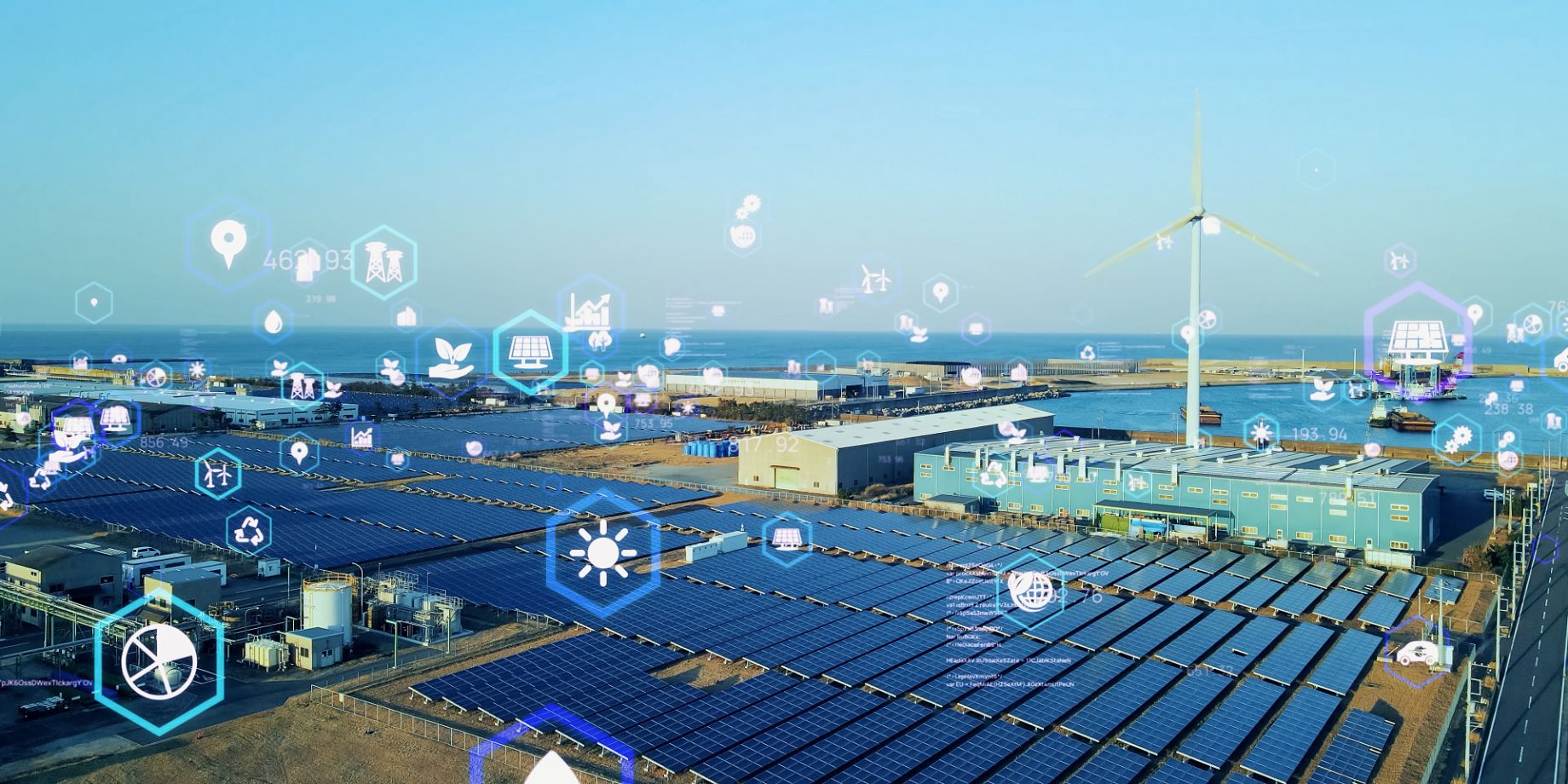
Advancing Solar Power as the Cornerstone of Renewable Energy
—What are the most rewarding and memorable moments of working in these businesses?
Satoyoshi
I feel most rewarded when a project finally takes shape through collaboration with diverse stakeholders who share the common goal of decarbonization.
Developing a solar power plant involves many stakeholders, including landowners, contractors, and power consumers. After carefully considering each party’s needs and concerns, we leverage Tokyo Century’s extensive network to develop the optimal solution and ultimately bring the plant online. What’s most rewarding is when I see clean electricity begin to flow, no matter how many times I experience it.
I’ve been interested in renewable energy since my university years and wanted to join a company doing business in that field. I joined Tokyo Century because I believed that a company with strengths in both finance and business development would allow me to work on frontline projects from my first year.
Since then, I’ve been part of the co-located battery storage business, which I find especially rewarding as a relatively new field. I still vividly recall when Tokyo Century’s first co-located battery storage project came online and how I shared the joy of that moment with a senior colleague.
Kumagai
—Finally, could you share your goals for the future?
Satoyoshi
While we anticipate advances in the use of various renewable energy sources, we believe that solar power will remain at the core for the time being. We’ll continue to work with our partners to create new value and ensure that Tokyo Century maintains and builds on its solid track record.
We also aim to increase our co-located battery storage projects. Our goal is to further expand this business by targeting not only our own power plants but also third-party facilities.
Kumagai
Takayuki Satoyoshi
Environmental Infrastructure Business Division IV
Satoyoshi joined the company in 2016 as a new graduate. After working in leasing operations in Japan within the corporate sales and area sales divisions, he transferred to the Environmental Infrastructure Business Division IV in 2025 through the Career Challenge Program. He is currently working with partner companies to develop renewable energy projects, primarily in solar power, aiming to flexibly meet diversifying energy needs.
Miu Kumagai
Environmental Infrastructure Business Division IV
Kumagai joined the company in 2023 as a new graduate. She has consistently worked in the renewable energy sector and is currently involved in the co-located battery storage business, which aims to enhance the value of existing solar power plants. She handles a broad range of operations, from selecting power plants and battery manufacturers to developing installation plans, as well as bidding in the electricity market.
*The contents of the article and the position titles are as of the date posted.

RECOMMEND ARTICLES